Incorrect Voltage Assumption
A device designed for standard AA voltage may not tolerate the higher voltage of a 14500 lithium-ion cell.
Build reliable compact electronics with customized 14500 lithium-ion battery packs engineered around your available space, operating current, runtime, charging interface and connector requirements.
✅ Compact 14500 Design | More power for space-limited devices.
✅ Flexible Voltage Configurations | Parallel configurations for longer runtime.
✅ Ready-to-Use Custom Pack | PCB, USB-C, NTC, wires and connectors integrated.

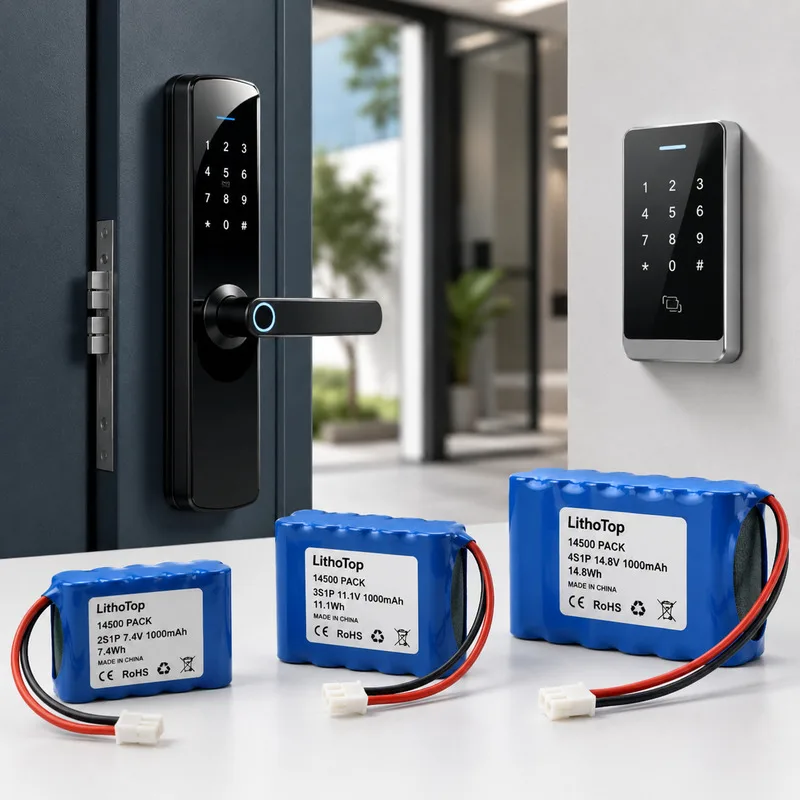
Compact rechargeable packs for electronic locks, access terminals and security hardware.

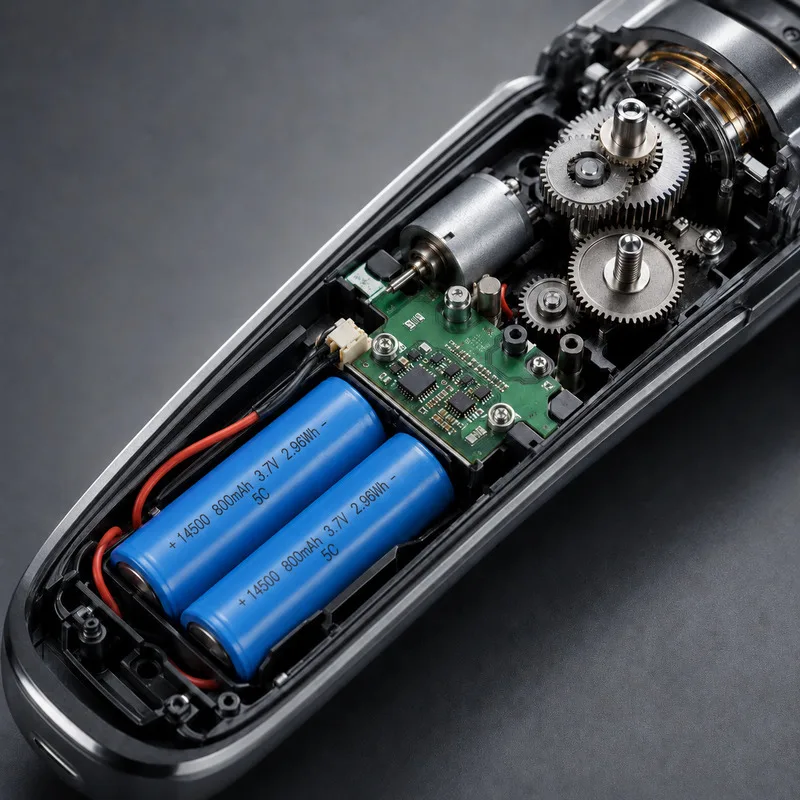
Cylindrical battery for shavers, beauty equipment and narrow-handle rechargeable products.

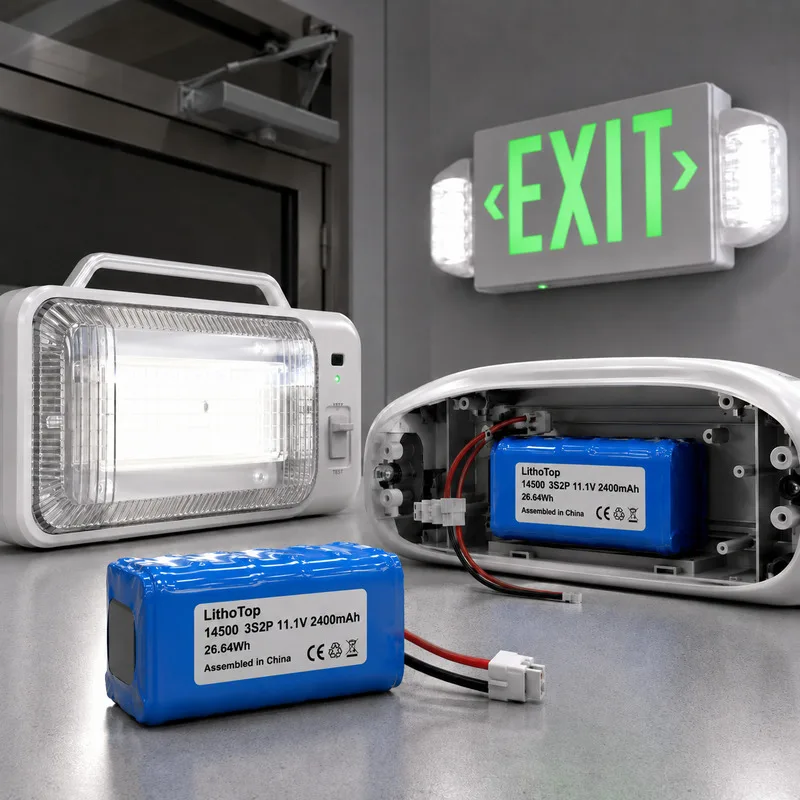
Rechargeable compact packs for backup lamps, signs and portable emergency equipment.

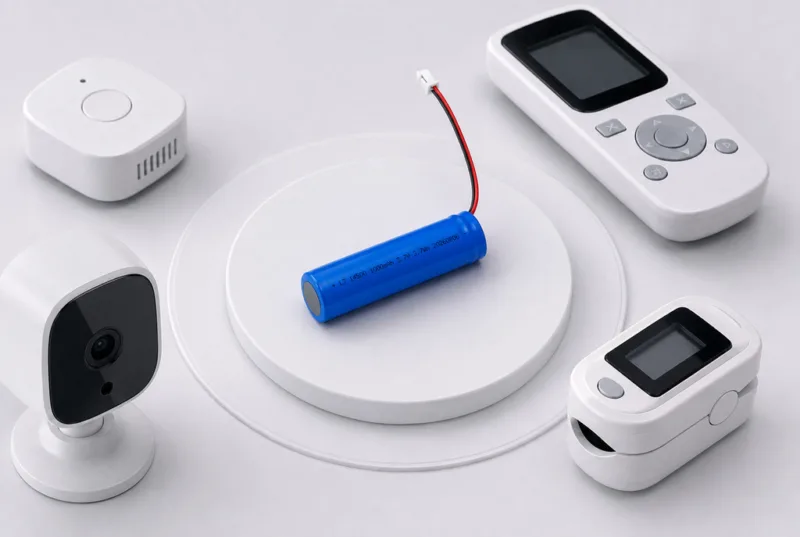
Protected battery solutions for wireless sensors, monitoring nodes and connected equipment.
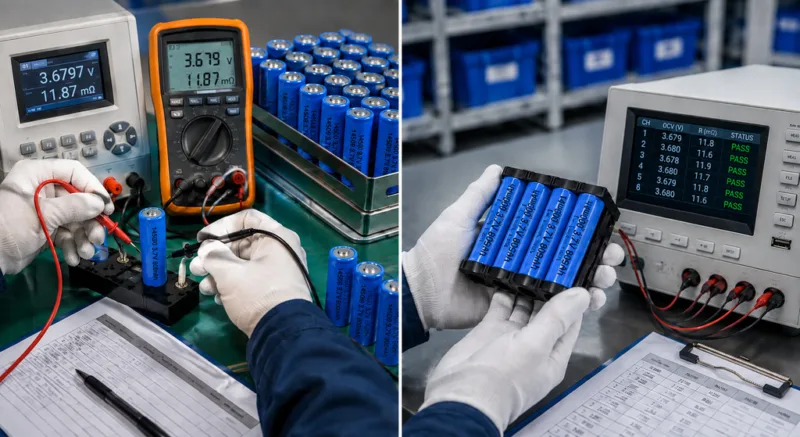
We turn complex power needs into safe and working hardware. Look at our real builds to see how we protect projects from failure with smart engineering.
Cell selection should balance available space, runtime, discharge current, cycle life, temperature and stable long-term supply.
| Cell Tier | Reference Capacity | Best For | Selection Focus |
|---|---|---|---|
| Standard Compact | 700–850mAh | Sensors, handheld electronics and compact instruments | Cost, size and stable supply |
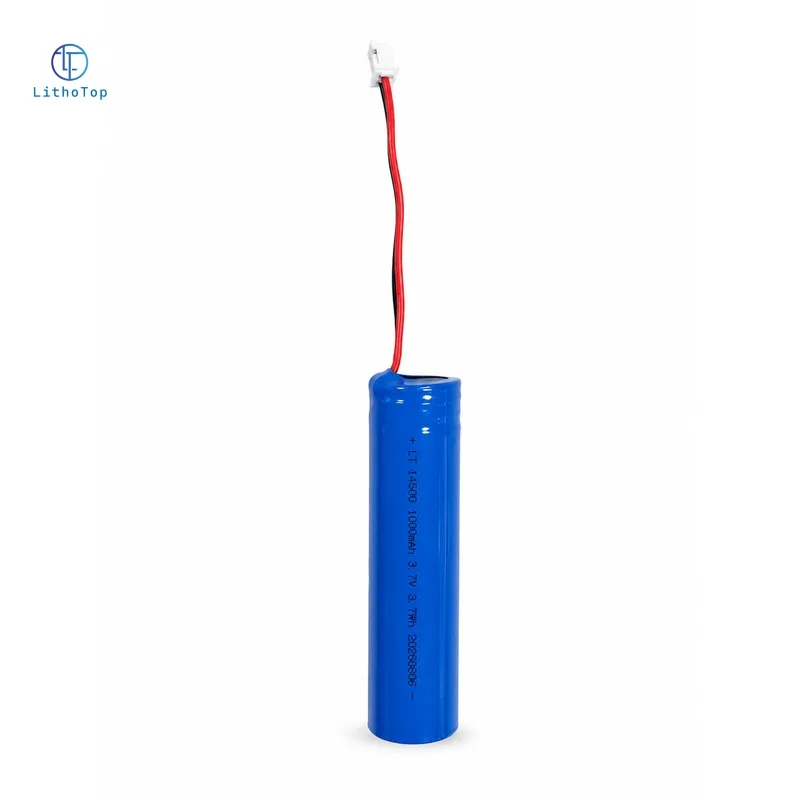
| Balanced Runtime | 900–1100mAh | Smart locks, diagnostic devices and portable equipment | Runtime and discharge balance |
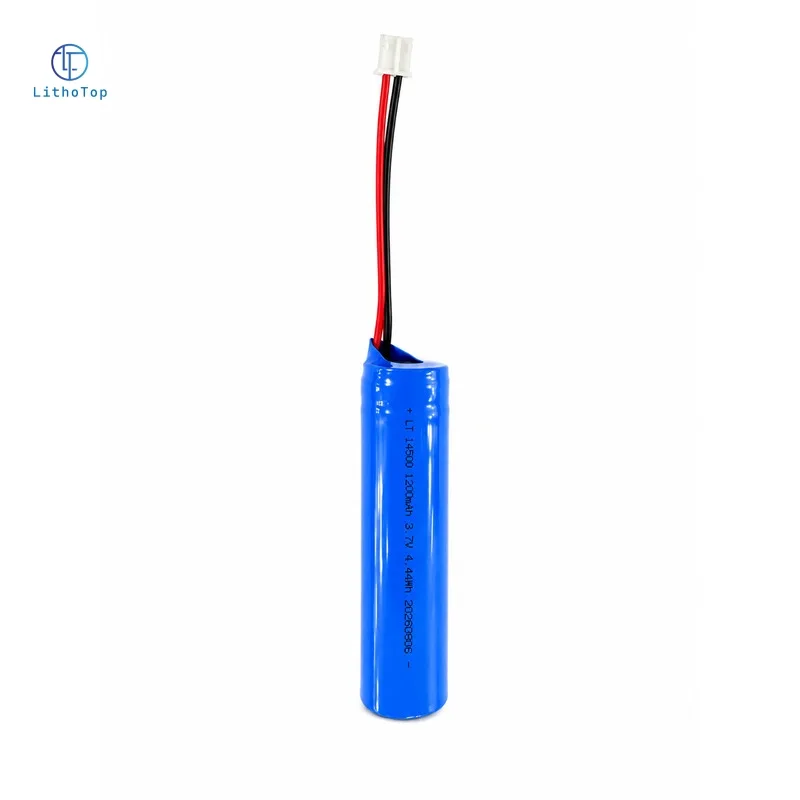
| High Capacity | 1200–1250mAh | Long-runtime compact devices | Maximum energy in limited space |
| High Drain | Based on cell rating | Motors, lighting and pulse-load equipment | Low resistance and current capability |
| Long Cycle | Project dependent | Frequently charged professional devices | Cycle life and stable aging |
Capacity ranges are for preliminary selection only. Final capacity, discharge current and certification depend on the selected cell model and pack construction.
Choose the cylindrical cell format according to available diameter, required capacity, discharge performance and total battery volume.
| Battery Format | Approximate Cell Size | Typical Capacity Positioning | Main Advantage | Best For |
|---|---|---|---|---|
| 14500 | 14 × 50mm class | Approximately 600–1250mAh depending on cell | Narrow diameter and compact integration | Handheld, tubular and space-limited devices |
| 18650 | 18 × 65mm class | Approximately 2000–4200mAh depending on cell | Balanced capacity, availability and cost | Medical, IoT, robotics and portable equipment |
| 21700 | 21 × 70mm class | Approximately 3000–6500mAh depending on cell | Higher capacity and strong power options | AGVs, mobility, tools and industrial systems |
Send us your voltage, capacity, current, battery compartment size, charging method and connector requirements. Our engineers will evaluate the structure and recommend a safe, manufacturable solution.
| Configuration | Nominal Voltage | Typical Capacity Structure | Recommended Applications |
|---|---|---|---|
| 1S1P | 3.7V | One-cell capacity | Sensors, handheld devices and compact electronics |
| 1S2P | 3.7V | Twice the single-cell capacity | Smart devices, portable equipment and longer-runtime products |
| 1S3P / 1S4P | 3.7V | Multi-parallel capacity | Compact backup systems and higher-runtime products |
| 2S1P | 7.4V | One-cell capacity | Instruments, motors and portable equipment |
| 2S2P | 7.4V | Twice the single-cell capacity | Robotics modules and professional handheld systems |
| 3S1P | 11.1V | One-cell capacity | Small motors, portable tools and control systems |
| 3S2P | 11.1V | Twice the single-cell capacity | Compact industrial devices |
| 4S and Above | 14.8V+ | Custom series / parallel design | Specialized equipment and OEM battery systems |
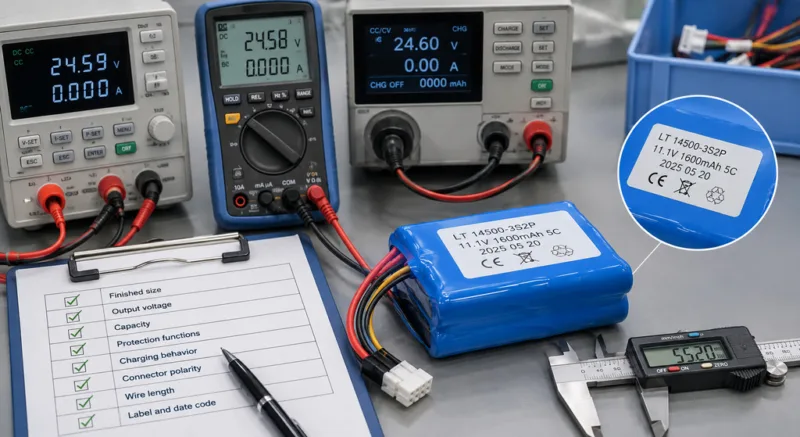
Finished pack dimensions depend on cell arrangement, PCM size, insulation, wire outlet, connector and housing structure.
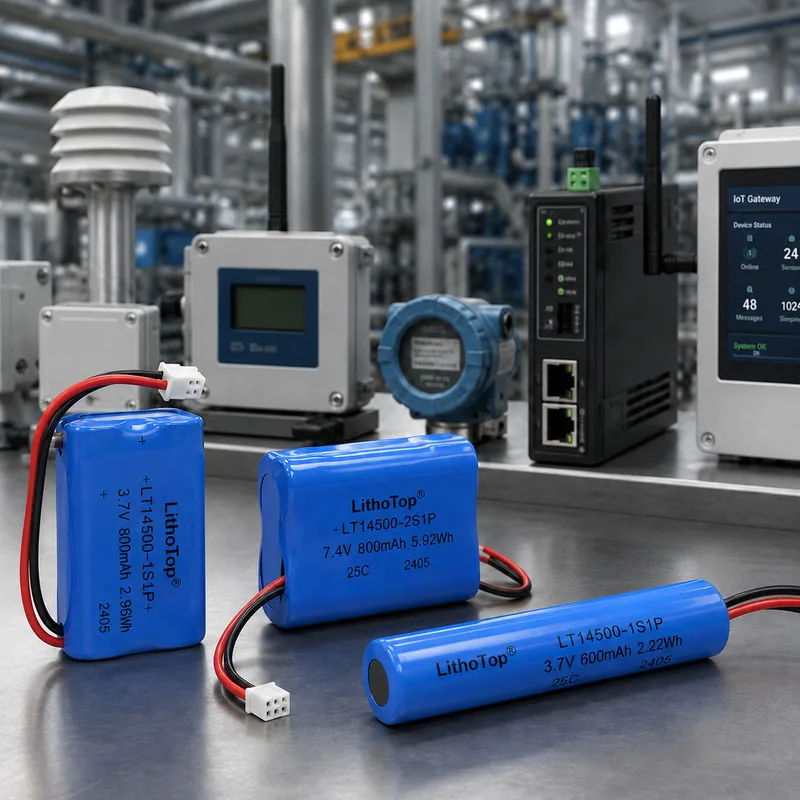
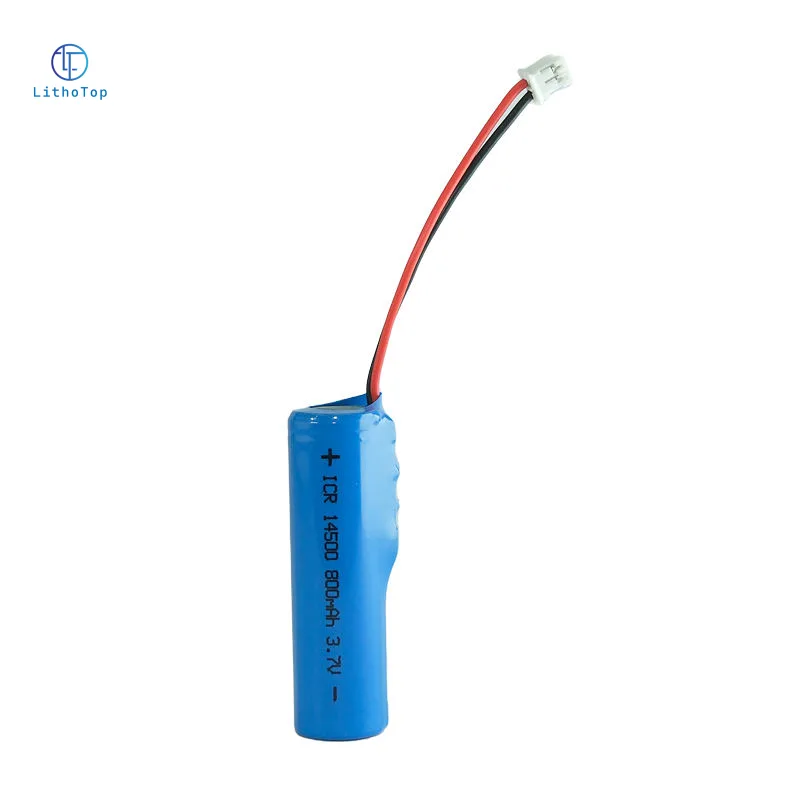
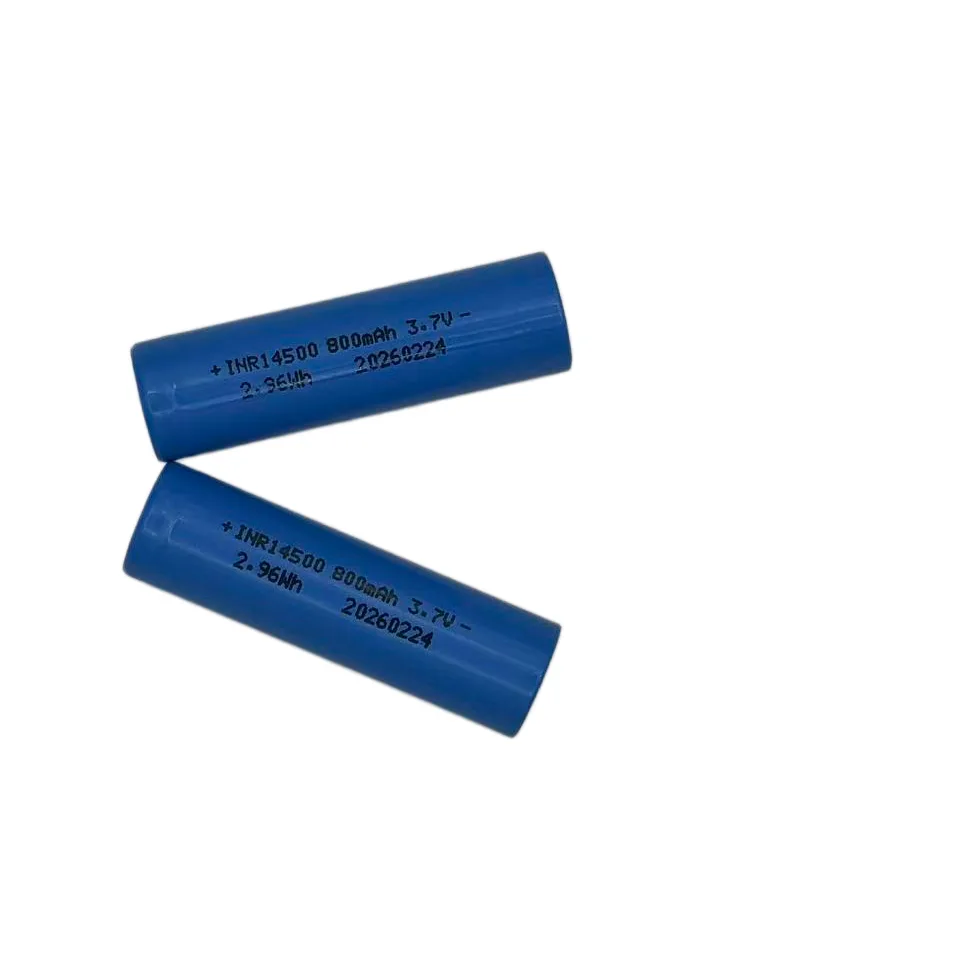
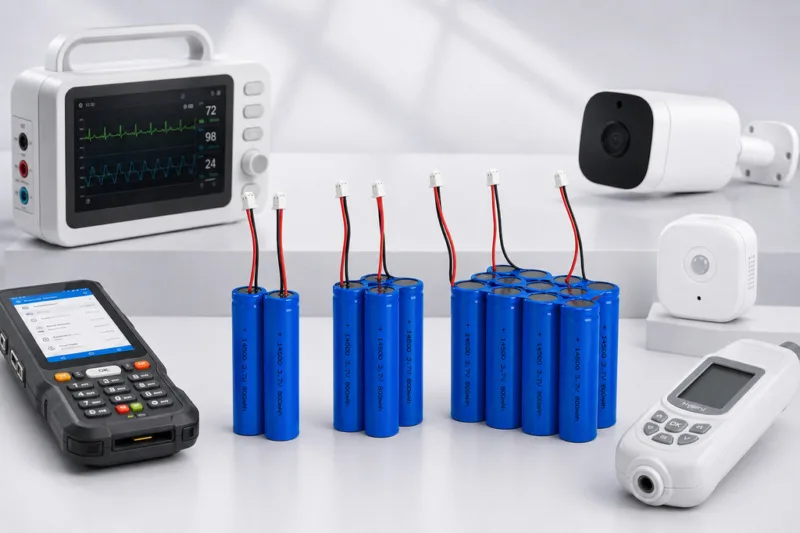
The 14500 format delivers rechargeable lithium-ion performance in a slim cylindrical structure for products that cannot accommodate larger 18650 or 21700 cells.
The narrow cylindrical structure fits handles, tubes, instruments, scanners and other space-limited electronic products.
A single lithium-ion cell provides a nominal 3.7V output, supporting compact rechargeable system architecture.
Cells can be configured in multiple series or parallel battery packs to increase voltage, capacity, current and operating time.
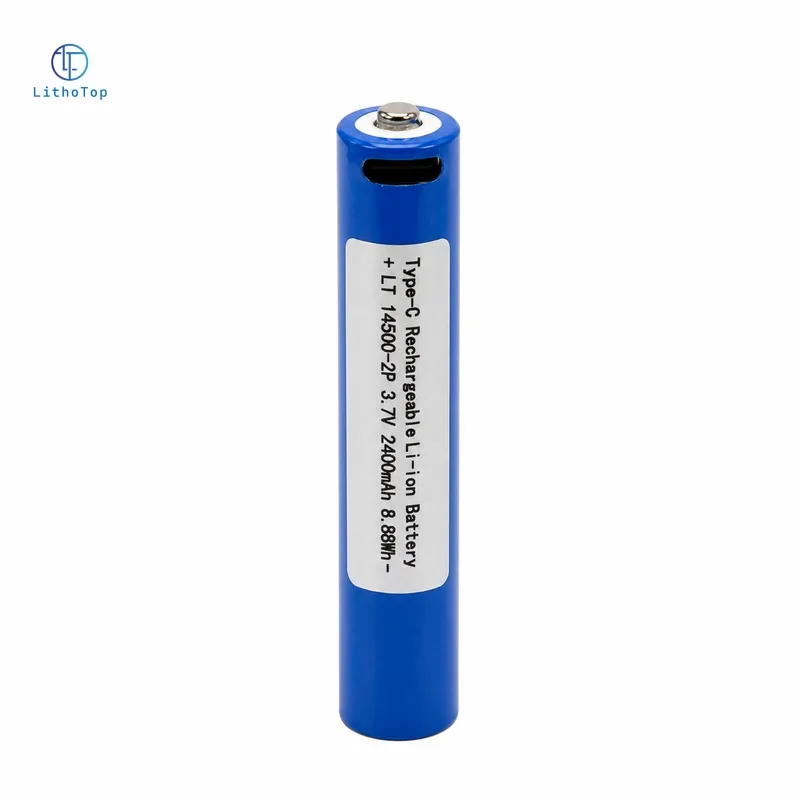
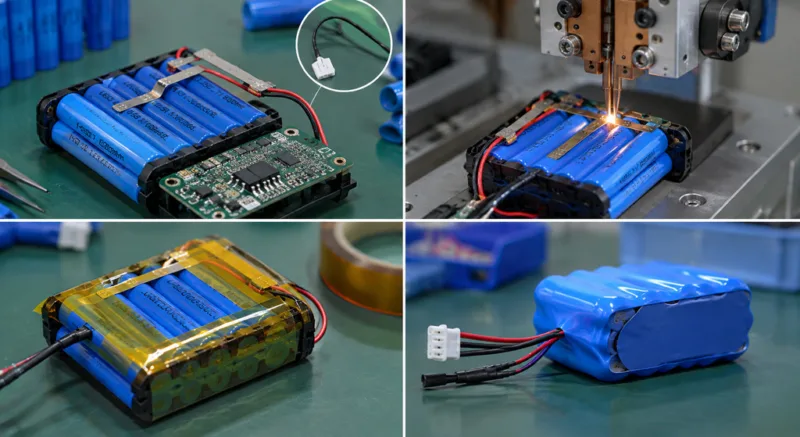
PCM, NTC, wires, connectors, USB-C charging and mechanical insulation can be integrated into one finished battery pack.

Optimized for devices where installation space and weight are the primary design constraints.
Best for: Smart sensors, handheld electronics, security devices, medical instruments and other compact products.
Configuration: 3.7V 1S1P with typical cell capacities from approximately 600mAh to 1250mAh, depending on the selected 14500 cell.
Why Choose It: The simple single-cell structure minimizes finished battery dimensions while providing reliable rechargeable power.

Designed for compact devices that require longer operating time while maintaining a 3.7V system.
Best for: Portable medical devices, IoT equipment, smart security products, handheld instruments.
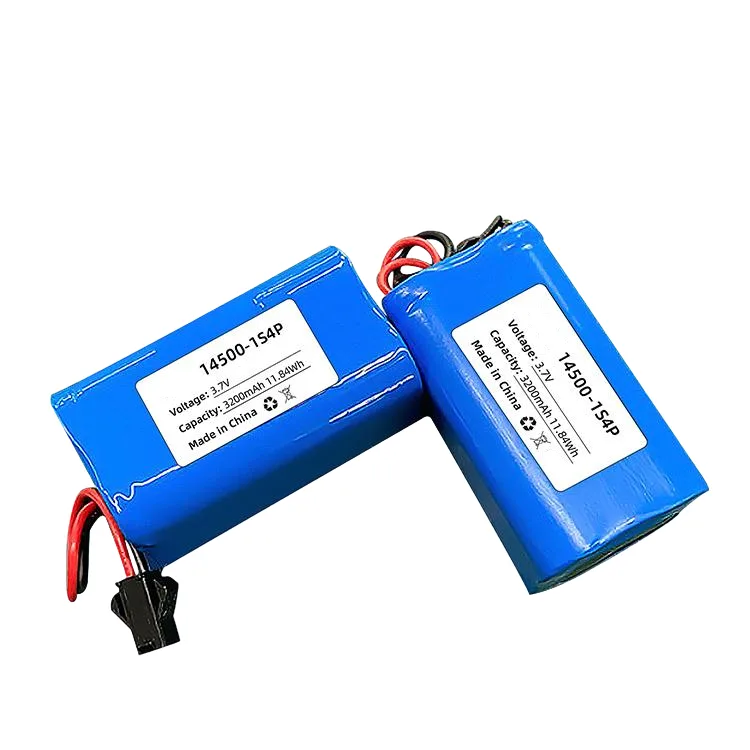
Configuration: 3.7V 1S2P, 1S3P or 1S4P configurations increase available capacity without changing the nominal voltage.
Why Choose It: Parallel 14500 cells provide higher capacity and longer runtime while retaining the advantages of a compact cylindrical battery structure.
A safe battery pack depends on the complete structure, not only the cylindrical cell inside it.


In a compact battery project, cell capacity is only one part of the design. Finished size, discharge current, protection electronics, wiring and mechanical tolerance must work together.
A device designed for standard AA voltage may not tolerate the higher voltage of a 14500 lithium-ion cell.
PCM, insulation, welding tabs, wires and connector outlets increase the final battery dimensions.
A higher-capacity cell does not automatically provide stronger continuous or peak-current capability.
Undersized wires or connectors may create voltage drop, unstable operation or heat during startup and pulse loads.
See how customized 14500 battery packs help product developers solve space, runtime, protection, and device integration challenges.


Have a Question?
Get clear technical answers to stop production risks and protect your project.
No. Although their external dimensions may be similar, their voltage and charging requirements are different.
Yes. PCM, NTC, PTC, wire harnesses and connectors can be customized according to the device requirements.
Yes. A USB-C charging interface or charging module can be evaluated according to the input power and battery structure.
Provide the maximum finished battery dimensions, including the available space for the PCB, wires, connector and cable bend.
Please provide voltage, capacity, dimensions, continuous current, peak current, charging method, connector, wire length, quantity and certification market.
Sample lead time depends on cell availability, PCM development, connector, housing, charging system and validation requirements. It is typically about 7–10 working days.
Turn Your Compact Battery Space into a Reliable Power Solution.
Send us your enclosure dimensions, voltage, operating time and peak-current requirements. LithoTop engineers will evaluate the cell configuration, protection circuit, connector and charging design.
Response within 12 hours. Save up to 30% on bulk orders.
🔒 100% Privacy. No Hidden Costs. Free Sample Options.
LithoTop | Battery Expert
Online
Hi! Welcome to LithoTop.
Please send your specs for an instant solution:
1. Dimensions (T*W*L)
2. Voltage & Capacity
3. Peak Current
I'm online to help you now!
— Caroline | LithoTop
WhatsApp Us
Online | Privacy policy
WhatsApp us
Response within 12 hours. Save up to 30% on bulk orders.
🔒 100% Privacy. No Hidden Costs. Free Sample Options.