The robotics industry is growing fast. More companies are building robots for different uses. But many face the same problem: standard batteries don't fit their needs. This creates performance issues, design limits, and higher costs.
Custom battery packs solve these problems. They match the exact power needs, size, and shape of each robot. This gives better performance, longer run time, and more design freedom. Standard batteries force you to change your design. Custom batteries adapt to your vision.
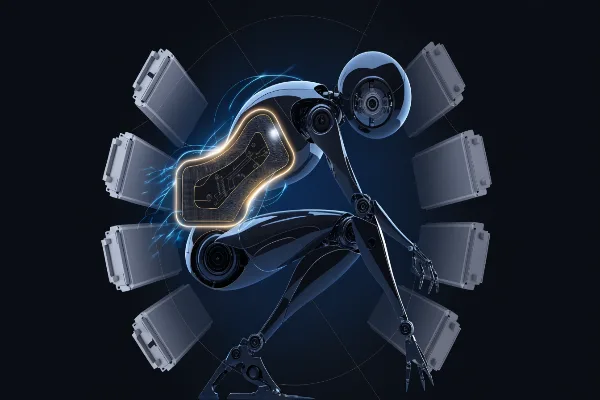
Standard batteries seem like an easy choice at first. They're available right away and cost less upfront. But as your robot project moves forward, you'll find they create more problems than they solve. Let's look at why custom battery packs are becoming essential for robotics companies.
What Makes Standard Batteries Wrong for Most Robots?
Standard batteries are made for general use. They work fine for phones or laptops. But robots are different. Each robot has unique power demands, space limits, and operating conditions.
Standard batteries create three main problems for robotics companies. First, they waste space because the shape doesn't match your robot's design. Second, they can't deliver power in the exact way your motors and systems need. Third, they often have too much capacity or too little, which means wasted money or poor performance.
Why Shape and Size Matter More Than You Think
Most robots have complex internal layouts. We work with companies who struggle to fit standard rectangular battery packs into their curved or narrow robot bodies. This forces them to make the robot bigger or change the design completely.
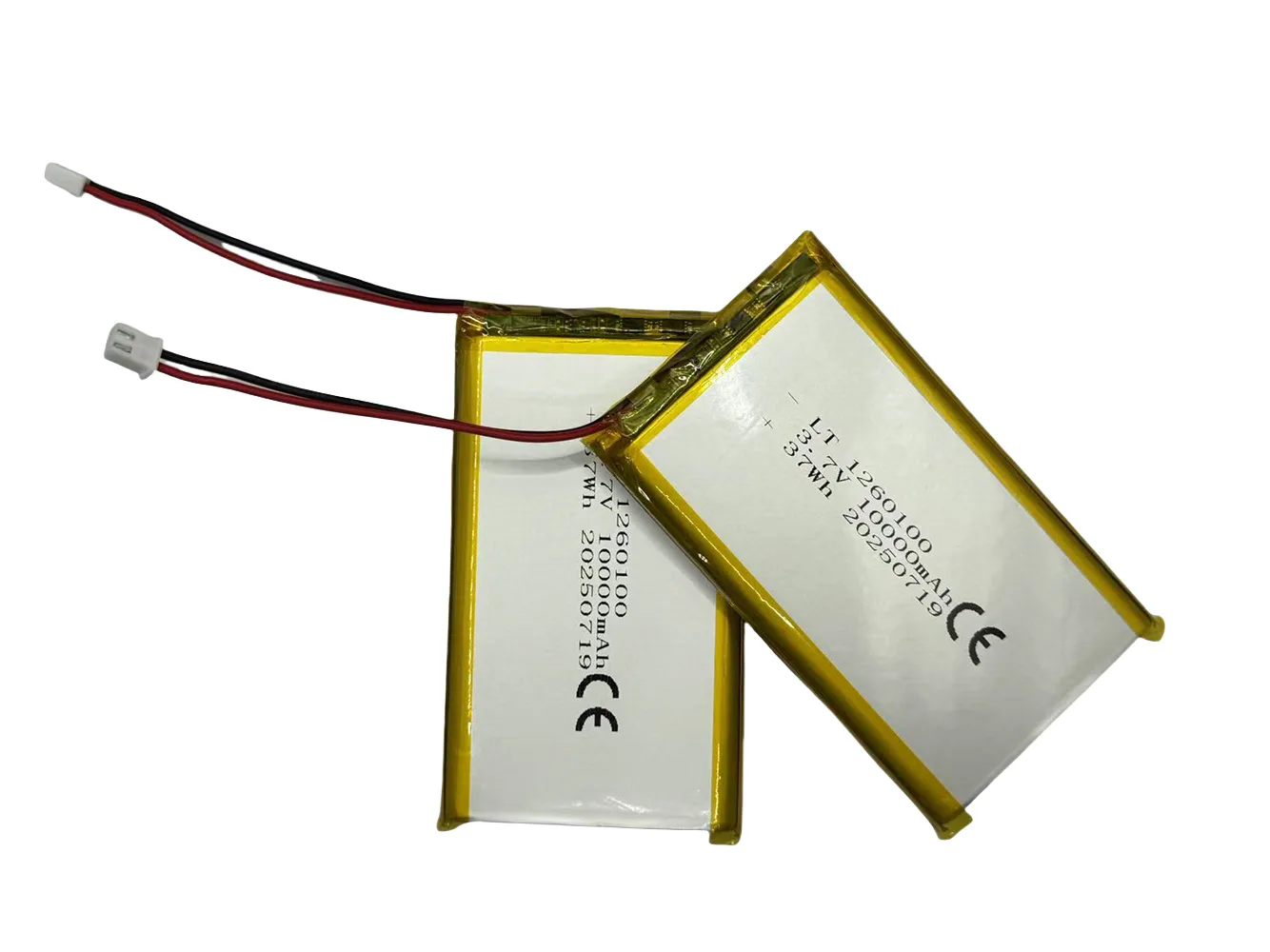
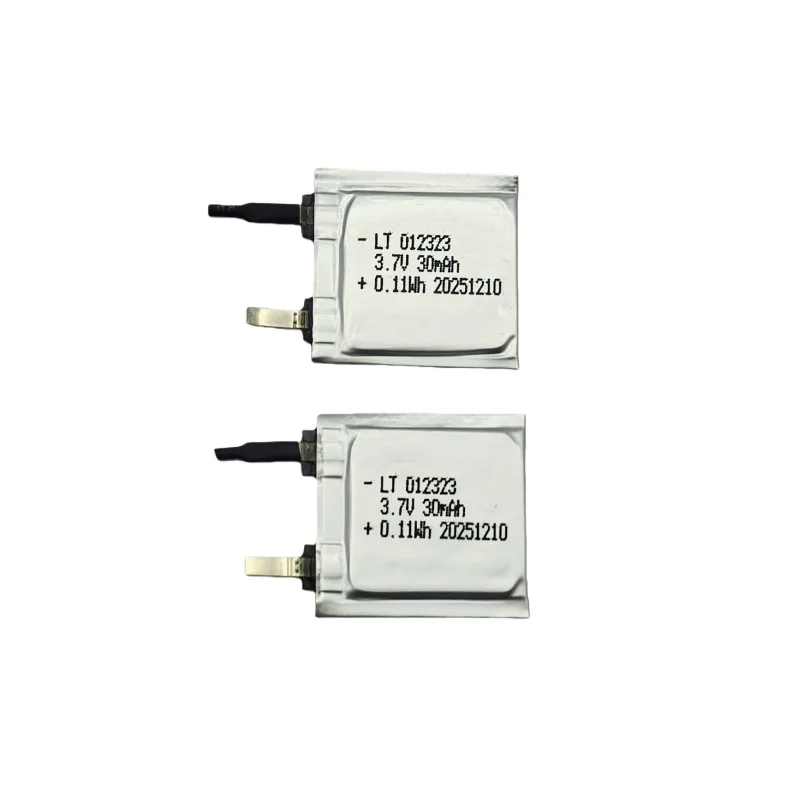
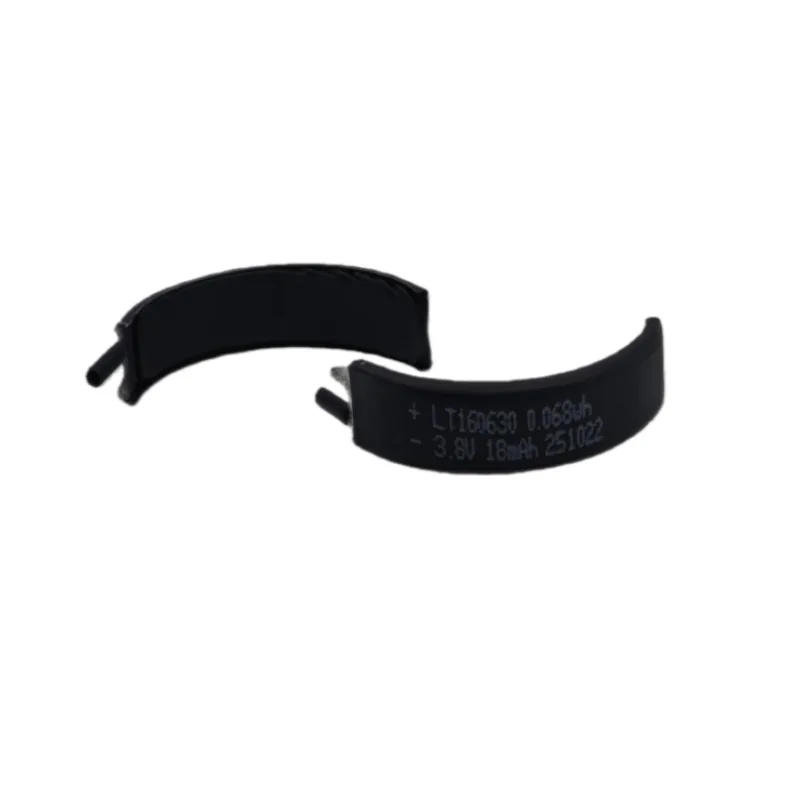
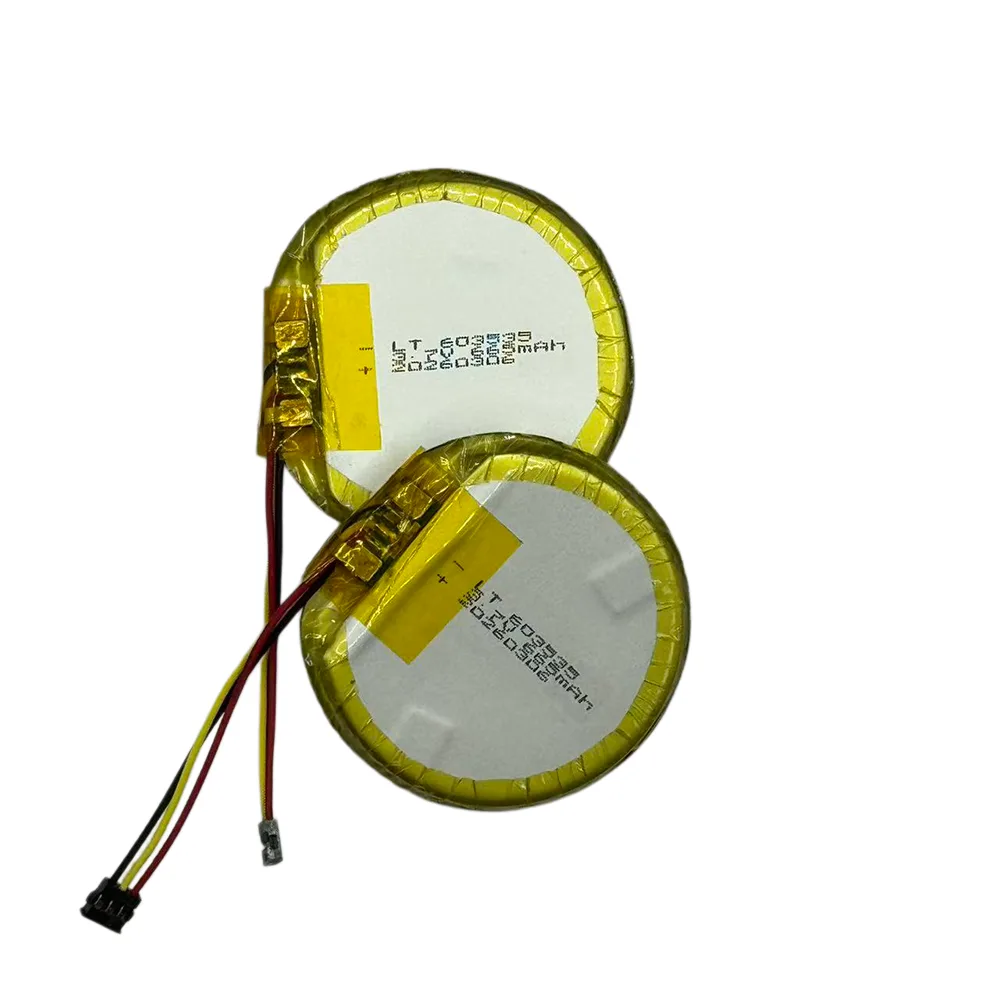
Custom battery packs can be curved, ultra-thin, or shaped exactly how you need. At LithoTop, we've made batteries as thin as 0.4mm and in almost any shape you can imagine. This means your robot design comes first, not the battery.
The space you save can be used for better components, more features, or a smaller, lighter robot. One of our clients reduced their robot's weight by 30% just by switching to a custom-shaped battery that fit their exact space.
Power Delivery Needs Are Different for Every Robot
Your robot's motors, sensors, and processors need power in specific ways. Some robots need high bursts of power for quick movements. Others need steady, long-lasting power for all-day operation.
Standard batteries are designed for average use cases. They might not handle the high current peaks your robot motors need. Or they might provide too much capacity that you'll never use, which adds weight and cost.
Here's what different robot types typically need:
| Robot Type | Power Requirement | Best Battery Solution |
|---|---|---|
| Service Robots | Steady, long-lasting | High-capacity LiFePO₄ |
| Industrial Robots | High burst power | High-rate Li-ion |
| Wearable Robots | Lightweight, flexible | Curved LiPo |
| Medical Robots | Safe, reliable | Custom Li-Polymer with protection |
| RC Robots | Very high discharge | High-rate cylindrical LiPo |
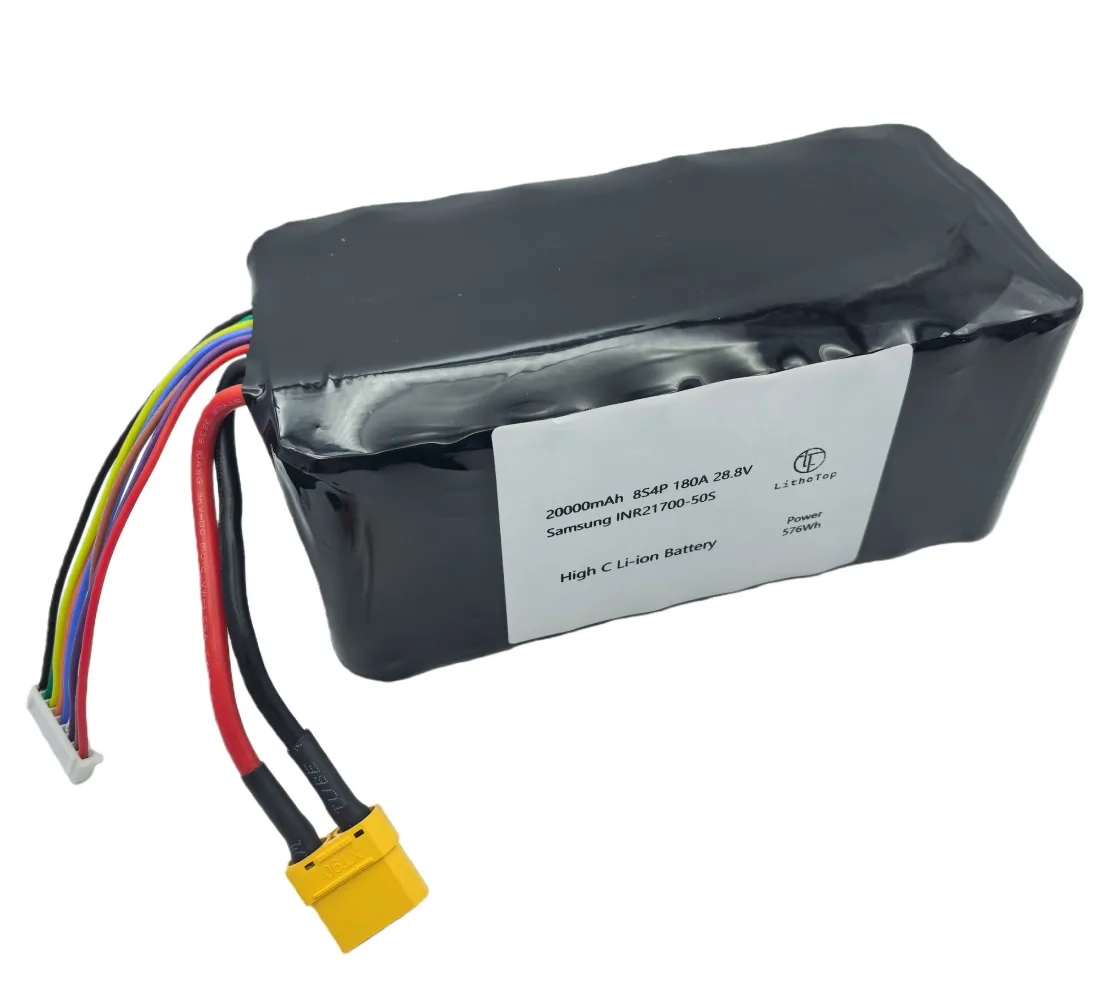
We customize the battery chemistry, cell configuration, and PCB protection based on your exact power profile. This gives you the performance you designed for, not what a standard battery happens to provide.
How Do Custom Battery Packs Actually Improve Robot Performance?
Better performance is the main reason robotics companies switch to custom batteries. Performance means different things for different robots. It could be longer run time, faster movement, or more reliable operation.
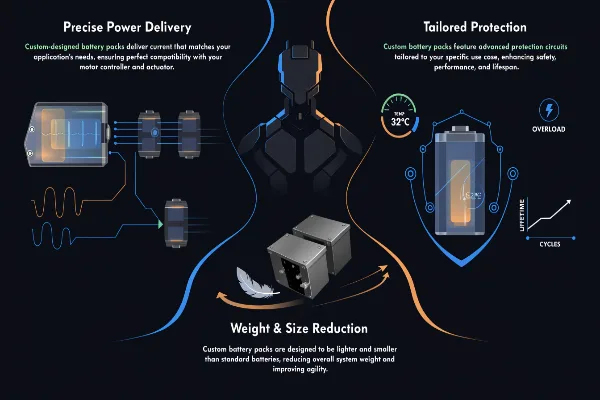
Custom battery packs improve performance in three ways. They deliver power exactly when and how your systems need it. They reduce weight and size, which helps with movement and energy use. They include protection features designed for your specific operating conditions, which prevents failures and extends battery life.
Real Power When You Need It
Standard batteries often can't handle the peak power demands of robot motors. When your robot tries to move quickly or lift something heavy, the battery voltage drops. This causes slow response, weak performance, or system shutdowns.
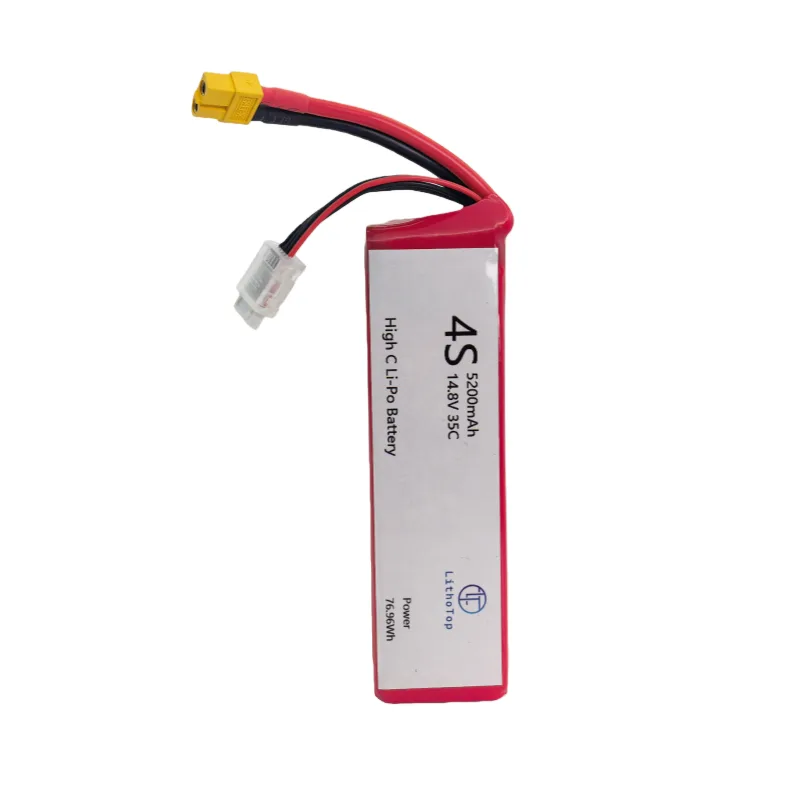
We design custom high-rate batteries that can deliver 10C, 20C, or even higher discharge rates[^1]. This means if you have a 1000mAh battery, it can safely deliver 10A or 20A when needed. Your robot responds instantly, moves faster, and performs as designed.
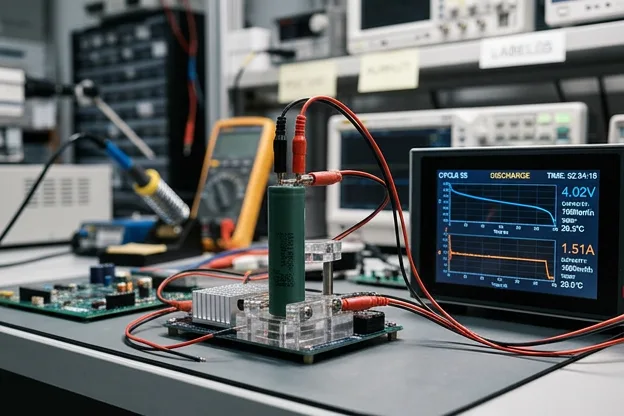
The battery management system (BMS) is also critical. We develop custom PCBs that monitor and protect your battery based on your actual use patterns. This prevents damage from over-discharge, over-current, or temperature extremes that your specific robot might face.
Weight and Size Optimization
Every gram matters in robotics. Heavier robots need more power to move, which drains the battery faster. This creates a negative cycle. Custom batteries let you use exactly the capacity you need in the smallest, lightest package possible.
We work with wearable robot companies where the battery needs to curve around joints or fit into tight spaces. Standard batteries would either not fit at all or add too much bulk. Our curved and ultra-thin batteries solve this.
One medical robot company we work with needed batteries for robotic exoskeletons. The battery had to curve around the leg and be very light. We made custom curved LiPo packs that were 40% lighter than the standard packs they tested before. The robot could run 25% longer because it used less energy to move.
Operating Life and Reliability
Custom batteries last longer because they're designed for your exact conditions. We can select cell chemistry, add thermal management, and tune the BMS to match how your robot actually works.
If your robot operates in cold warehouses, we can optimize for low-temperature performance. If it's in hot environments, we add thermal protection. If it goes through many charge cycles every day, we use cells and chemistry that handle this well.
The result is fewer battery replacements, less downtime, and lower long-term costs. We've seen custom battery packs last 2-3 times longer than standard alternatives in demanding robot applications.
What Are the Hidden Costs of Using Standard Batteries?
Standard batteries look cheaper at first. The unit price is lower and they're available immediately. But the total cost of using standard batteries in robots is usually much higher than companies realize.
Hidden costs come from design compromises, wasted capacity, frequent replacements, and lost opportunities. When you design your robot around what standard batteries can do, you limit your product's potential. When the battery doesn't match your needs, you pay for capacity you don't use or face performance problems that hurt sales.
Design Compromise Costs
Every time you change your robot design to fit a standard battery, you make your product worse. Maybe you make the robot bigger, which makes it less appealing to customers. Maybe you add weight, which reduces performance. Maybe you limit features because there's no room.
These compromises have real costs. A bulkier robot might lose sales to slimmer competitors. A heavier robot costs more to ship and uses more power. Fewer features mean a lower price point or fewer buyers.
We've worked with companies who spent months redesigning their robots to fit standard batteries, only to find the final product didn't meet their original vision. They then came to us for custom batteries and wished they'd done it from the start.
Wasted Capacity Means Wasted Money
Standard batteries come in fixed capacities. If you need 2500mAh but can only find 3000mAh or 2000mAh standard options, you either pay for capacity you'll never use or get less run time than you need.
That extra 500mAh you don't need adds weight, takes up space, and costs money with every unit you build. Over thousands of units, this waste adds up significantly.
Custom batteries give you exactly the capacity you need. Not more, not less. This optimizes your cost per unit and your robot's performance.
Replacement and Warranty Costs
Standard batteries that don't match your needs fail faster. They might not handle your discharge rates, your operating temperatures, or your duty cycles. Each failure means a warranty claim, a replacement, and an unhappy customer.
We see this often with robotics companies who try standard batteries first. The failure rate is high because the battery wasn't designed for their specific stress factors. After switching to custom batteries designed for their use case, failure rates drop dramatically.
Lower failure rates mean lower warranty costs, better customer reviews, and higher customer lifetime value. These savings often exceed the slightly higher upfront cost of custom batteries.
When Should a Robotics Company Consider Custom Battery Packs?
Not every robotics project needs a custom battery from day one. But there are clear signs that tell you when it's time to consider custom solutions. Missing these signs can cost you time, money, and market opportunities.
You need custom batteries when standard options force design compromises, when your power needs are unique, when you're scaling to production, or when reliability is critical for your application. These situations make the investment in custom development worthwhile and often necessary for success.
Signs You've Outgrown Standard Batteries
Your robot design keeps getting changed to fit the battery, not the other way around. This is the clearest sign. The battery should enable your design, not limit it.
You're having performance issues that trace back to power delivery. Motors don't respond fast enough. Systems shut down under load. Run time is too short.
You're facing reliability problems. Batteries fail in the field. Temperature extremes cause issues. Cycle life is shorter than expected.
Your production volume is growing. Once you're making hundreds or thousands of units, the cost benefits of custom batteries become significant. The per-unit savings add up quickly.
Development Stage Considerations
For early prototypes, standard batteries make sense. You're still testing concepts and don't need custom solutions yet. But as you move toward production, that changes.
Here's a typical timeline:
| Stage | Battery Approach | Why |
|---|---|---|
| Concept/Prototype | Standard batteries | Quick testing, design still changing |
| Alpha Testing | Consider semi-custom | Design firming up, test fit improvements |
| Beta/Pre-production | Custom battery development | Lock in final design, test manufacturing |
| Production | Custom batteries | Optimize cost, performance, reliability |
We typically recommend starting custom battery development when you enter beta or pre-production stages. This gives time to develop, test, and refine the battery design before mass production.
Starting earlier means your robot design can fully leverage custom battery benefits from the beginning. Starting later might mean redesign work or missed opportunities.
Application-Specific Needs
Some applications almost always need custom batteries. Medical robots need special safety features and certifications. Wearable robots need specific shapes and lightweight solutions. Industrial robots need extreme durability and long cycle life.
If your robot operates in extreme temperatures, underwater, in high vibration, or other challenging conditions, standard batteries won't work well. These situations need custom solutions designed specifically for those stresses.
If safety certifications are critical, custom batteries let you build in the specific protection and testing needed to pass those requirements from the start.
What Should You Look for in a Custom Battery Partner?
Choosing the right battery manufacturer is as important as deciding to use custom batteries. The wrong partner can cause delays, quality issues, and added costs. The right partner becomes a valuable part of your development team.
A good custom battery partner needs four things: technical expertise to design solutions for your needs, manufacturing capability to deliver quality at scale, experience with your type of application, and good communication throughout the process. Without all four, you'll face problems.
Technical Capabilities That Matter
Your battery partner needs real engineering expertise. They should understand power systems, not just assemble cells. They should be able to design custom PCBs for battery management. They should know different cell chemistries and when to use each one.
At LithoTop, we have 30 R&D and design engineers who work on custom battery development. We develop our own PCBs, which means we can create protection systems exactly matched to your needs. We work with Li-ion, LiPo, LiFePO₄, and other chemistries, so we can recommend the best option for your specific use case.
Ask potential partners about their engineering team. Can they design BMS systems? Can they do thermal analysis? Can they help optimize your power system, not just provide a battery?
Look for partners who have solved problems similar to yours. We specialize in curved batteries, ultra-thin batteries, and special shapes because many robotics and wearable applications need these. Our experience with these challenging forms means we can solve your problems faster.
Manufacturing Quality and Scale
Good engineering means nothing if manufacturing can't deliver quality. You need a partner with strong quality control, proper certifications, and the capacity to scale with you.
We implement 5S production management and have a dedicated QC team that oversees every stage: incoming materials, in-process checks, final product checks, and outgoing shipment checks. This catches problems before they become batch issues.
Certifications matter too. We hold ISO9001 and ISO14001 certifications[^2] and have passed on-site audits by UL, TUV, SGS, and CQC. Our products can provide CE, UN38.3, RoHS, MSDS, KC, CB, UL, PSE, CCC, and other certifications as needed.
Production capacity is important if you plan to scale. We have about 300 employees and can produce up to 120,000 units daily. This means we can grow with you from small production runs to high volume.
Communication and Partnership Approach
Technical skills and manufacturing quality are useless if communication is poor. Your battery partner needs to understand your needs, provide clear updates, and be responsive to changes.
Look for partners who ask lots of questions upfront. Good questions about your application, your requirements, and your challenges mean they're thinking about the solution, not just taking an order.
We work closely with robotics companies throughout development. We provide samples quickly (5-10 days) so you can test early. We give clear timelines for production (2-4 weeks typically) so you can plan. We stay in contact about any issues or changes.
The best partnerships feel collaborative. Your battery partner should help you think through problems, not just execute what you tell them. We often suggest improvements to our clients' designs that save cost or improve performance.
Experience in Your Field
Battery needs vary widely between industries. A partner with experience in robotics understands the specific challenges you face. They've already solved similar problems and know what works.
We work extensively with robotics companies, wearable device manufacturers, and medical device developers. These applications often need the curved, ultra-thin, and custom-shaped solutions we specialize in. We understand the space constraints, power demands, and reliability needs these products face.
Ask potential partners for examples of similar projects. Do they have case studies? Can they share performance data? Do they understand the operating conditions your robots will face?
Industry experience also means they understand relevant regulations and testing requirements. We know what certifications robotics products typically need in different markets because we've helped companies get them before.
How Does the Custom Battery Development Process Work?
Understanding the development process helps you plan timelines and know what to expect. Many companies worry that custom batteries mean long delays and complicated procedures. The process is actually quite straightforward with the right partner.
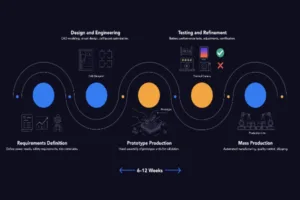
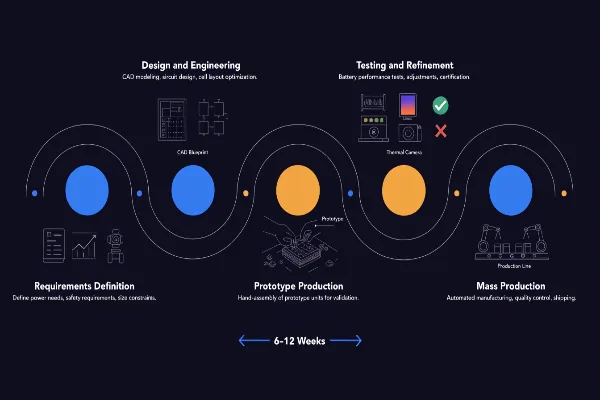
Custom battery development follows five main stages: requirements definition, design and engineering, prototype production, testing and refinement, and mass production. The entire process typically takes 6-12 weeks from first contact to production-ready batteries[^3], depending on complexity.
Requirements Definition and Consultation
Everything starts with understanding your needs. We begin by asking detailed questions about your robot and its power requirements.
What are the physical dimensions available for the battery? What shape works best? How much energy capacity do you need? What are the peak and average power demands? What operating temperatures will the robot face? How many charge cycles do you expect over the product's life?
We also discuss your production timeline, target volume, and any specific certifications you need. This helps us recommend the right approach and give accurate timelines.
This stage usually takes a few days to a week, depending on how complex your requirements are and how much testing data you already have about your power needs.
Design and Engineering Phase
Once we understand your requirements, our engineering team designs the battery solution. This includes selecting the right cell chemistry, determining the cell configuration, designing the physical form factor, and developing the BMS/PCB protection system.
For robotics applications, we often work on multiple design aspects simultaneously. The mechanical design determines the shape and how the battery fits in your robot. The electrical design determines the cell configuration and protection circuits. The thermal design makes sure the battery can handle heat during high-power operation.
We create detailed drawings and specifications for your review. You can provide feedback and request changes. We iterate until the design meets all your requirements.
This phase typically takes 1-2 weeks, depending on how custom the solution is. Simple adaptations of existing designs go faster. Completely new form factors or unique protection requirements take more time.
Prototype Production
Once the design is finalized, we produce prototype samples. These are fully functional batteries built to the exact specifications we designed. They're not just mockups – they're real batteries you can test in your robot.
We typically produce 5-20 prototype samples, depending on your testing needs. These samples let you verify the fit, test the performance, and run any reliability or safety tests you need.
Sample production usually takes 5-10 days. We can sometimes expedite this if you have urgent deadlines.
[^1]: "[PDF] A Guide to Understanding Battery Specifications - MIT", https://web.mit.edu/evt/summary_battery_specifications.pdf. The C-rate indicates discharge current relative to battery capacity; high-performance lithium polymer cells can achieve discharge rates exceeding 20C through optimized electrode design and low internal resistance, though this typically reduces cycle life. Evidence role: definition; source type: education. Supports: meaning and feasibility of high C-rate discharge. Scope note: Sustained high-rate discharge generates heat and accelerates degradation [^2]: "LithoTop About Us - Quality Management", https://lithotop.com/about/. ISO 9001 specifies requirements for quality management systems, while ISO 14001 addresses environmental management; LithoTop maintains these international standards to ensure consistent organizational practices. [^3]: "Battery Development Center | RIT", https://www.rit.edu/batterydevelopment/. Custom battery development involves design iteration, prototype fabrication, testing, and qualification phases; development timelines vary based on complexity, with straightforward adaptations requiring weeks and novel configurations potentially requiring months. Evidence role: general_support; source type: research. Supports: typical timeframes for custom battery development. Scope note: The stated 6-12 week timeline represents an optimistic scenario and may not account for certification requirements or design iterations